





Academics & Assessment
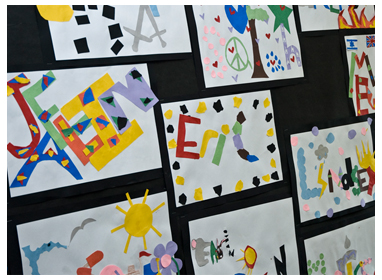
Brooklake Christian School is an academically challenging environment that will inspire students to reach for their God-given potential. Maintaining high standards and providing students with the necessary tools and encouragement to meet learning goals will allow for maximum student growth.
BCS curriculum has been specifically designed to be a systematic progression from grade to grade. The purpose of this progression is to see that students are gaining all the skills and knowledge necessary to form a thorough understanding of each subject area. Cross curricular instruction allows students to make connects among subjects. Connections with past learning help new learning to be more meaningful and in turn it is retained longer term.
Academic excellence is only part of the equation. Student discipleship is of upmost importance. Helping students transfer head knowledge about God and His Word, to heart transformation is our top priority.
Assessment
Good assessment results from a broad spectrum of methods and the effective combination of formal and informal, formative and summative authentic assessments to monitor student learning. Assessments include the following levels of Bloom's (revised) Taxonomy. "Remembering: Can the student recall or remember the information? Understanding: Can the student explain ideas or concepts? Applying: Can the student use the information in a new way? Analyzing: Can the student distinguish between different parts? Evaluating: Can the student justify a stand or decision? Creating: Can the student create new product or point of view?"
Since one size does not fit all, good assessment should give students the opportunity to express their learning in a variety of ways. Formative assessment (on-going) occurs daily in some form, not simply at the end of the chapter or unit test (summative assessment), as exercised traditionally in education. Checking for student understanding in the form of asking questions, having a class discussion, asking for examples, creating a mind map, etc., makes assessment authentic. This daily informal assessment allows the teacher to check for student understanding and monitor and adjust as needed. Formal, summative assessments are important but cannot be the only way teachers assess their students’ progress. These assessments should range from tests, essays, presentations, posters, role play, debate, etc. Formative assessment balanced with summative assessment, formal and informal, allows teachers to provide for maximum learning.